Skip to content
MACH GROUP
Menu
  • Home
  • About
    • About MACH Group
    • Our Ethos
    • Meet The Team
    • Jobs
  • Contact Us
  • Acoustics
    • Our Acoustic Services
    • Building Design
    • Noise And Vibration Surveys
    • Environmental Noise Assessments
    • BS4142 Assessments
    • R&D
    • Portfolio
  • Energy
    • Our Energy Services
    • Daylight Modelling
    • Overheating Assessments
    • Energy Statements
    • Part L Calculations
  • Testing
    • Sound Testing
  • Products
    • About Our Products
    • The Honeycomb Attenuator
    • Applications
    • Product Key Features
    • Resources
  • Explore
    • MACH Books
    • MACH Videos
    • Download
blank
Posted by IT MACH

Pulling the wool over BREEAM

29th January 2018Acoustic Design, BREEAM
We believe in low carbon buildings and the typical 3 and 4 credits allocated purely to acoustics by BREEAM can be more or less guaranteed to help achieve the highest possible rating.

MACH differs from other consultants in our approach to achieving the energy usage credits, and credits relating to sustainable recycled materials. We aim to lead in the acoustics design of green buildings, investing over 7% of our turnover into research and by collaborating with leading universities. Our research focuses on reducing the energy usage of buildings as well as material selection. Acoustics is not often linked with these subjects, however naturally ventilated and hybrid buildings often suffer from noise break-in and high levels of sound transfer and occupancy noise issues. Focussing on these subjects means that MACH has and can develop a wide range of solutions to overcome the exceptional challenges in low carbon buildings.


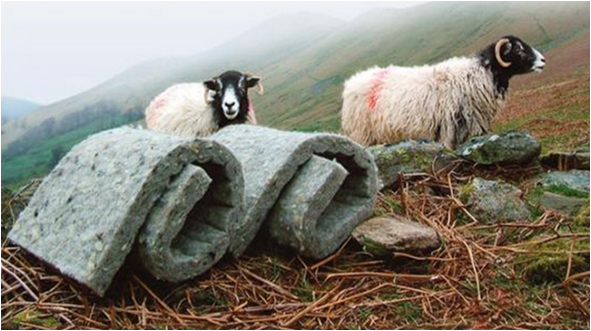
Material selection and reducing the level of embodied energy – sheeps wool used in thermafleece is often a preferred option 

Pulling the wool over BREEAM

blank
Posted by IT MACH

Case Study: Hertfordshire University

26th February 2014Architecture, BB93, BREEAM, Case Study, NAT Vent Attenuator, Under Floor, Vented Facades

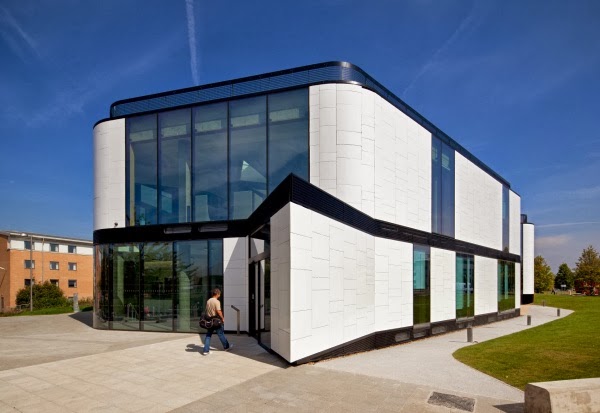
The Law Court at the University of Hertfordshire is a £10M advanced facility, including a full-scale courtroom with public gallery, a working law clinic, a purpose built mediation centre and a dedicated CPD suite, as well as a large number of offices and classrooms. A BREEAM project, the building was to be naturally ventilated. MEP designers AECOM specified the Mach Acoustics NatVent Attenuator to provide a vented facade solution using weather louvres, connected to a raised, vented floor containing the Nat Vent Attenuator.

Case Study: Hertfordshire University

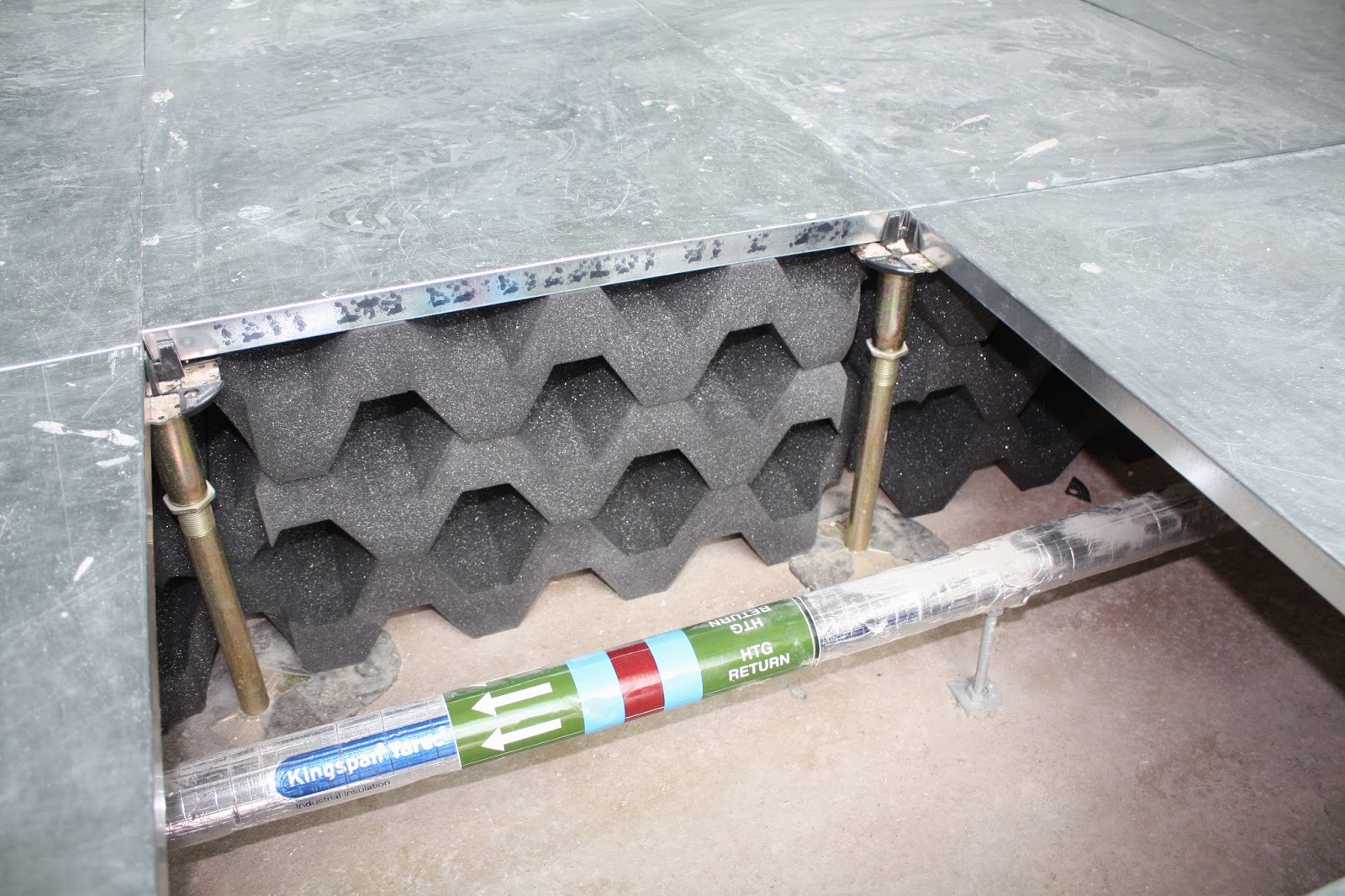
Installing the NVA under-floor is a veryeffective method when dealing with high noise levels. The vent openings are made within the spandrel panel between transoms. Air passes into the cellular space by passing through a external vent opening, through the NAT Vent Attenuator. The floor void is used as plenum – air enters the rooms above by means of floor diffusers.

Case Study: Hertfordshire University
Image provided by Aecom

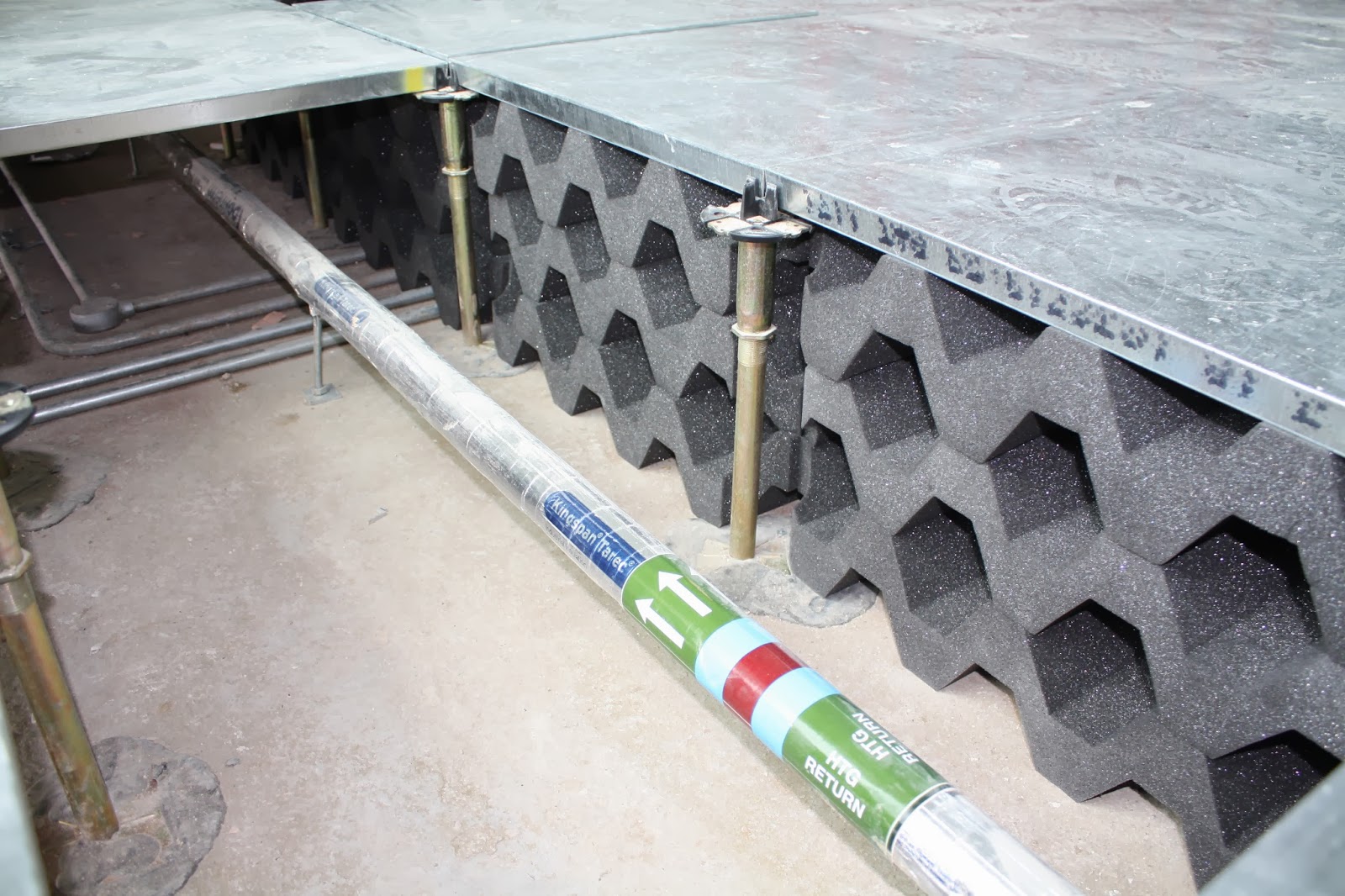
Situated on a busy campus and next to a busy bus route, the natural ventilation strategy needed to be acoustically attenuated. Adding to the challenge was the fact that the building had already be designed for air inflow through the flooring, with acoustic dampers, louvre and bird mesh limiting flow to an already small 1.5m2 face area. Only thanks to the adaptable NVA foam, MACH Products was able to design the attenuator around modulated Kingspan flooring, sitting on pedestals 360mm high, fully filling the void. The profile was designed to the same size as the 600x600mm grid created by the flooring, such that the NVA would be easy to install. By installing in segments like this, we were able to create the required length of attenuator for the noise level at the facade.

Case Study: Hertfordshire University

Due to the bespoke nature of the NVA, the attenuator could be simply installed in coordination with the modular grid based flooring. The NVA segments were slid into place between the pedestals (1/4 circle sections were added to the corner profile to account for the structure), followed by the matching 600x600mm floor sections. Building services often exist within the flooring void, including a heated element in this case. The NVA foam can be easily adapted on site to accommodate for these items, unlike a common pre-defined attenuators.

Case Study: Hertfordshire UniversityCase Study: Hertfordshire University Case Study: Hertfordshire UniversityCase Study: Hertfordshire University

Click the preview below to download the full case study:

Case Study: Hertfordshire University
blank
Posted by IT MACH

Case Study – Llwynderw Primary School

4th October 2013Architecture, BB93, BREEAM, Cross Ventilation, NAT Vent Attenuator, Natural Ventilation, Vented Facades
Case Study - Llwynderw Primary School

Llwynderw Primary School is a project in Abergaveny that MACH Acoustics worked on in partnership with Stride Treglown Architects and Willmott Dixon

The school incorporates natural ventilation through a vented facade and openable windows, which cross ventilate classrooms via a central chimney – saving money, building space and simplifying the construction.

Case Study - Llwynderw Primary School

An important stage in the acoustic design of a building is an environmental noise survey of the existing site, a service provided by MACH Acoustics.

Using the data collected, a dynamic noise map was constructed and used to access the noise levels at each facade and the resulting noise break-in within the teaching spaces. It was clear that the site was not particularly noisy and that an open window would provide enough attenuation at the facade facing away from the roads – simple and low cost.

Case Study - Llwynderw Primary School

A ventilation strategy was developed in close coordination with Stride Treglown Architects – using the sound map – which efficiently attenuated noise on each facade.

On the noisy road facing facades, a cedar shingles feature created a duct, with intake perpendicular to the ground and containing the NVA. A 90deg arrangement like this increases attenuation and minimises impact on building space – highlighting the bespoke design options that the NVA offers. The quieter rooms with central chimney simply used openable acoustic windows.

The central chimney shown above is the highlight of the natural ventilation project. Each stack of classrooms featured a small sqaure chimney, which vented out through natural vent towers on the roof of the building. Details of the this are shown on the right.
Case Study - Llwynderw Primary School

A testament to the NVAs versatility whilst maintaining class leading acoustic performance, the build was impressive architecturally whilst naturally ventilating and meeting both BB93 and BB101 requirements as a teaching space.
Thanks to a partnership between MACH Acoustics and Strides, the building received a BREEAM ‘Very Good’ rating and was well received by parents, pupils and residents of the area.
Click the preview below to download the full case study (pdf)
Case Study - Llwynderw Primary School

blank
Posted by IT MACH

Case Study – Windford Primary School

28th April 2011BB101, BB93, BREEAM, Case Study, NAT Vent Attenuator, Natural Ventilation, Vented Facades

Winford school is located directly under the flight path of Bristol Airport, as such noise ingress is a significant issue. During the design stage of this building several design options where reviewed.

Case Study - Windford Primary School

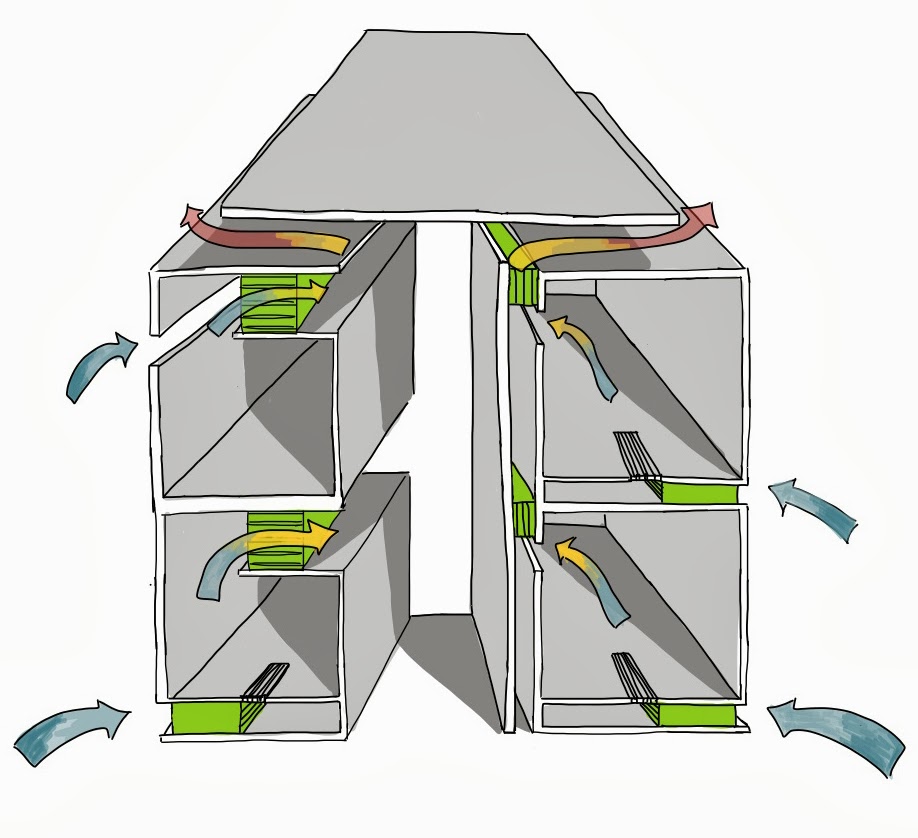
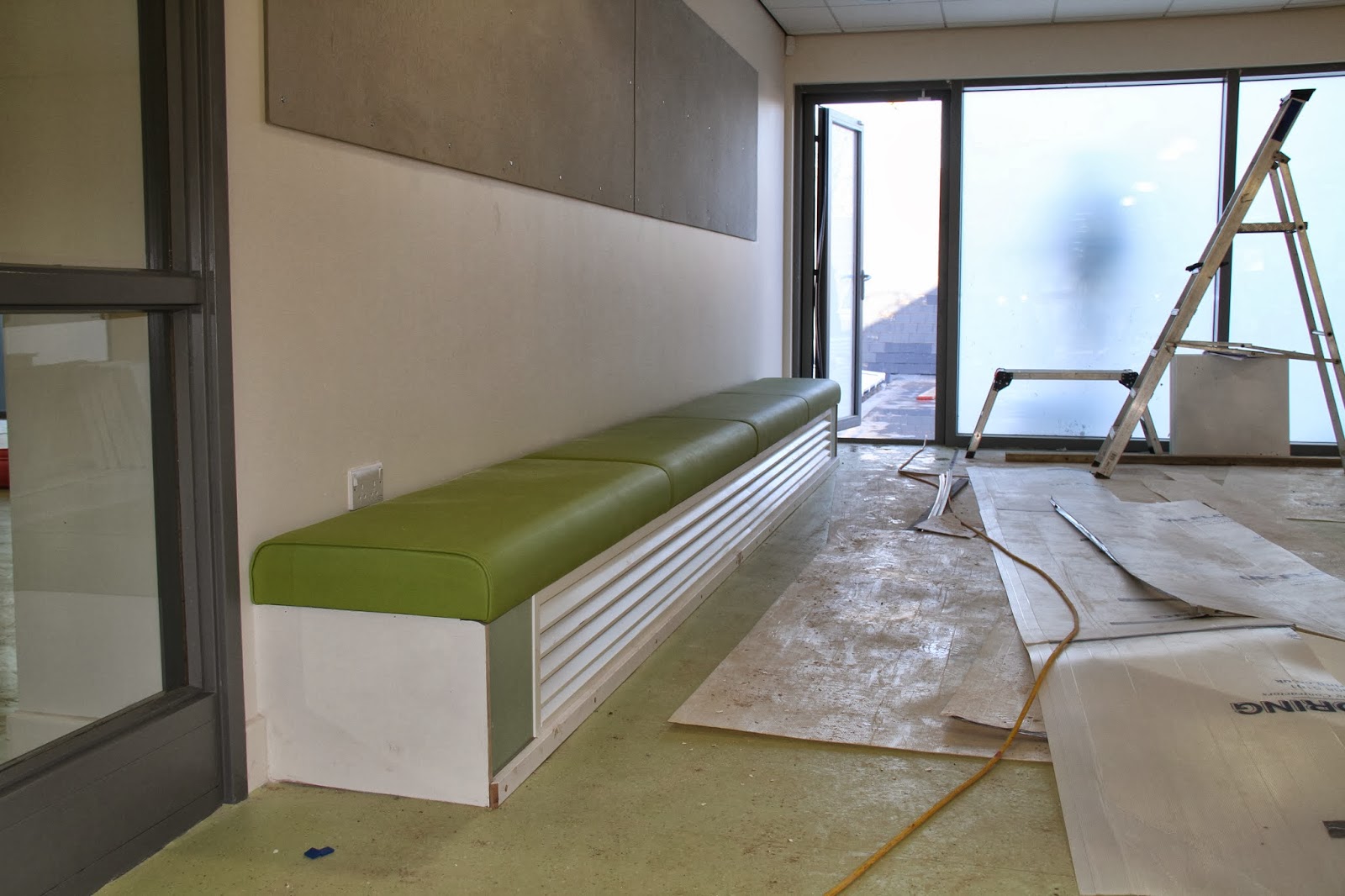
The school is a prime example of the versatility of the NVA and MACH Acoustics. Facade ventilation is incorporated through window and horizontal louvres. Cross ventilation is applied through internal benches and exhausted through atrium vents.

For the design of this building cost was a primary factor. There was a desire to naturally ventilate but under the flight path of Bristol Airport and with cost limits it was a challenge acoustically.

Case Study - Windford Primary School


A full natural ventilation strategy was designed in partnership with Stride Treglown Architects. Air would enter the building through openable windows and horizontal louvred ducts – controlled by a BMS – ventilate classrooms and exit through the roof of a central atrium known as the ‘heart’. Cross ventilators were designed between floors, discretely ducted within ground level benches – maximising building usage.

Case Study - Windford Primary School
The horizontal facade included thermal dampers, actuated by the building management system (BMS) and featured a 900 bend; reducing the protrusion and increasing acoustic attenuation. 
Case Study - Windford Primary School

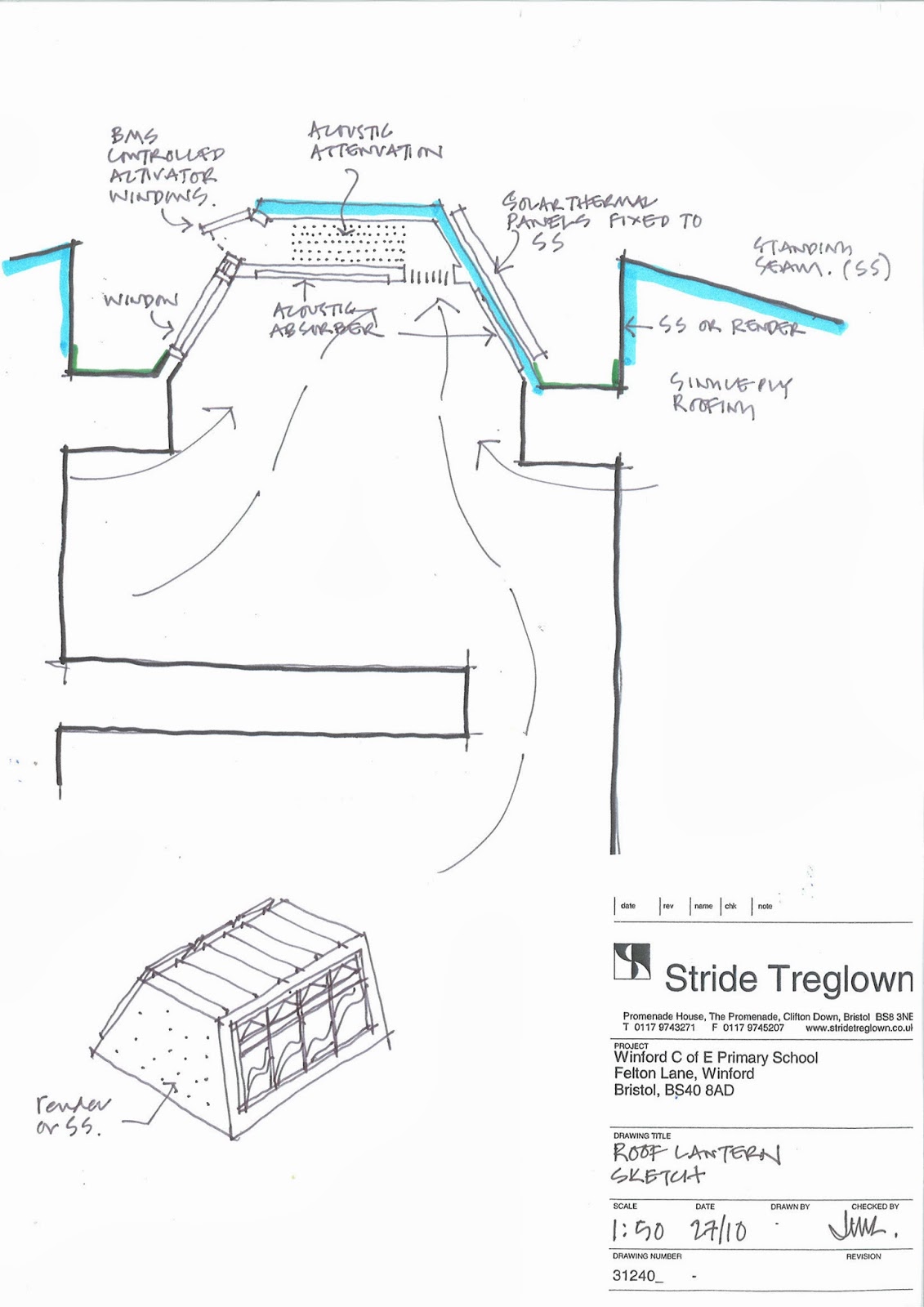
The central ‘heart’ of the building includes a plenum, where the hot air will exit the building. The design included a NVA bulkhead, mounted with BMS controlled actuated windows.

Working with Strides, the flexibility and bespoke nature of the NVA allowed for this design and enabled the same space to include solar thermal panels.
Case Study - Windford Primary School
The school was fully compliant with BB93, confirming exceptional acoustic design considering the potential clash between natural ventilation and the busy Bristol Airport flight path.
Case Study - Windford Primary School
Importantly, the reception of the building has been extremely positive, with teachers, parents and pupils heaping praise for the spacious and pleasant working environment. Winford’s pupils, who, according to parents are now ‘excited’ to go to school, enjoy day lit, naturally ventilated internal spaces with glazed screens between them so that all activity is in view.

The build received a BREEAM ‘Very Good’ rating and will generate a minimum of 15% of predicted energy consumption, thanks in part to the well executed natural ventilation system.

Click the preview below to download the full case study (pdf).
Case Study - Windford Primary School
blank
Posted by IT MACH

Natural Ventilation Feasibility

16th August 2010BB93, BREEAM, NAT Vent Attenuator, Natural Ventilation, Vented Facades
As per the introduction to this blog, MACH Acoustics aims to provide a useful blog providing ideas, details and knowledge, where people can discuss ideas and hopefully move forwards in a more suitable and low carbon way.
MACH Acoustics has recently published four conference papers on the acoustic design of low energy buildings. Subjects covered are the acoustic performance of open windows, the design of high performance natural air vents, the onsite performance of corridor walls and methods of achieving cross ventilation. We are currently working on a 5th paper looking at acoustic treatments in combination with thermal mass cooling. 
The starting point for this blog will therefore be a description of these papers.  The titles of each of the papers are listed below. There is also a link to a PDF copy of these papers below.
Acoustic Scaled Models and Naturally Vented Facades
NAT Vent Cross Talk Attenuator
NAT Vent Attenuator and Facades
Acoustic Performance of Open Windows
Green acoustic consultants probably have the greatest effect on a buildings carbon emission when reviewing the design of vented facades. This element of design is also likely to have the most significant impact upon the level of energy used by a building.
The graph below provided by Brent Associates Architects presents key information with respect to the energy consumption of building types and their location. This information in turn demonstrates how best to reduce the energy consumption of buildings.
Natural Ventilation Feasibility
Figure 1 – Energy consumption for a range of building types and their location
This graph shows that the greenest buildings are those that incorporate three elements; natural ventilation, a town or city centre location and the reuse of a building in the form of a refurbishment.  This conclusion is made on the basis that natural ventilation is significantly more energy efficient than mechanical ventilation (1 to 2 Figure 1).  A city centre location for a building reduces a significant chunk of the buildings carbon emissions as a result of reduced transportation (2 to 3). The third significant reduction in energy is achieved through refurbishing a building.  Here, the embodied energy required to form a building is not needed and hence this is a significant design goal for low energy building design (3 to 4).   
With respect to acoustics, these requirements make things difficult.  It is always complex and more complicated to refurbish a building. The difficulties arise as a result of reduced levels of flexibility in terms of design, structural constraints, facade restraints, planning, historical limitations, as well as other factors. As consultants we therefore need to be more creative and have a wide range of products and/or designs to overcome these limitations.
Locating the building within a city or town centre will always bring issues with respect to noise break in. The figure below shows a noise map taken from www.noiserus.com. Table 1 shows the percentage of land where it is possible to comply with BREEAM and BB93 internal noise levels when a building is ventilated by means of opening windows. The sound reduction of an open window is assumed to be 10 dBA.

Natural Ventilation Feasibility

Figure 2 – Town centre noise map provided by www.noiserus.com.
Table 1 – Percentage of sites available within town centres, where simple openable windows provide adequate levels of acoustic resistance such to comply with BREEAM and BB93 requirements.
Space
Target Noise Level
Percentage of site suitable
for  natural ventilation
BREEAM – single occupancy offices
<40 dBA
41%
BREEAM – multiple occupancy offices
40-50 dB LAeq,T
47%
BB93 – classroom
35 dBA
22%
BB93 – lab/workshop
40 dBA
41%
It is clear from the figure above that the development of green buildings within towns and city centre locations, will more often than not require acoustic solutions which provide high levels of acoustic attenuation to environmental noise break in.
My next entry will therefore look at methods of increasing the acoustics resistance of vented facades.
©2015 MACH Acoustics Terms of use Privacy policy Cookie policy BRISTOL 0117 944 1388 LONDON 07717 712603